
How to Spot a Cancerous Mole: Understanding the ABCDE Rule
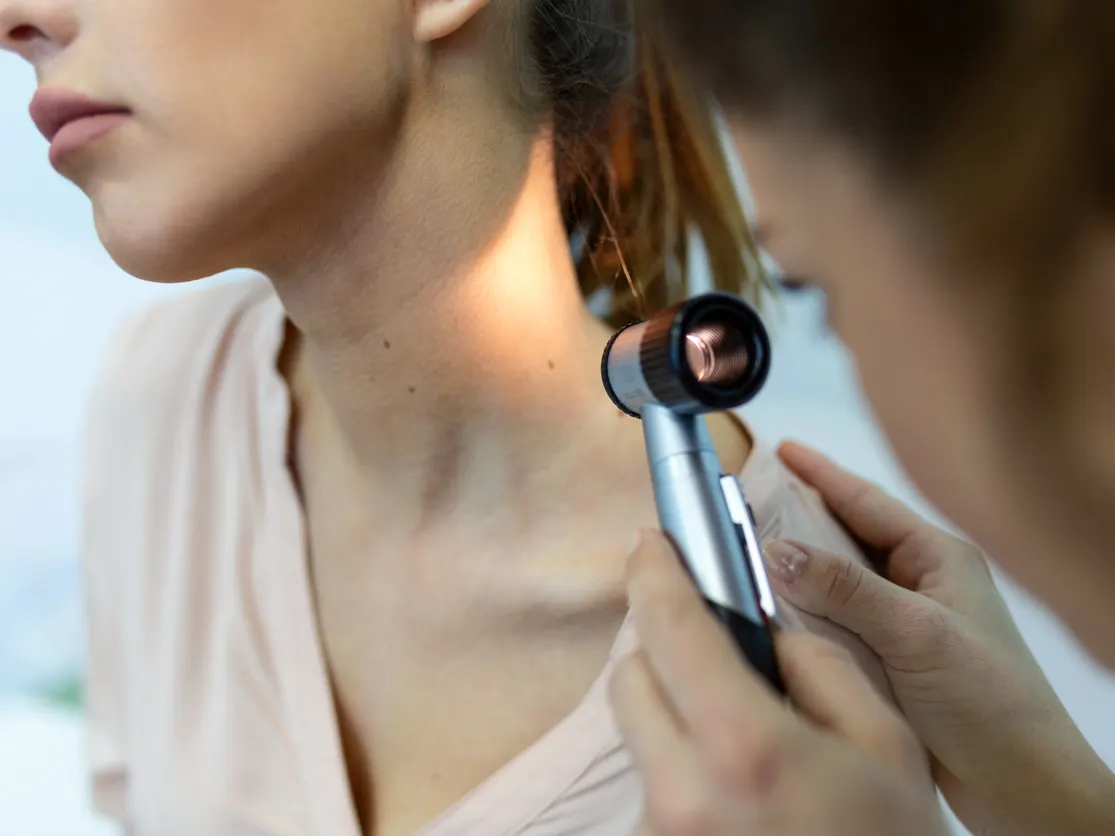
A mole that suddenly looks different can make you wonder what changed and whether you should worry. Most moles are harmless, but certain changes can indicate a cancerous mole, including melanoma. The ABCDE rule gives you a simple way to recognize features that deserve a closer look.
At Boyne Dermatology in Jacksonville, FL, we evaluate moles and other concerning skin changes. Board-certified dermatologist Dr. Joy Boyne has over 35 years of experience. Our team can examine a suspicious spot and determine what it may need.
What Is Melanoma?
Melanoma is a type of skin cancer that begins in melanocytes, the cells that produce the pigment that gives your skin its color. It can develop in an existing mole or appear as a new spot on the skin. Because melanoma can spread to other parts of the body, recognizing suspicious changes and having them evaluated by a dermatologist is important.
What Is the ABCDE Rule?
The ABCDE rule highlights five melanoma warning signs to watch for during a skin self-check. Keep in mind that a mole with one of these traits does not automatically mean cancer. A dermatologist should evaluate suspicious changes.
- A is for Asymmetry: Look at the two halves of the mole. One side that does not match the other can be a warning sign.
- B is for Border: Pay attention to the edges. Melanoma may have borders that appear irregular, ragged, notched, or blurred rather than smooth and clearly defined.
- C is for Color: A typical mole often has fairly even coloring. A spot containing several colors or shades, such as brown, black, red, or blue, deserves attention.
- D is for Diameter: Watch spots larger than about 6 millimeters, roughly the size of a pencil eraser. However, size alone cannot tell you if a mole is melanoma.
- E is for Evolving: Changes over time matter. Schedule a mole check when a spot grows, changes shape or color, or develops symptoms such as itching or bleeding.
When Should You Have a Mole Checked?
Check your skin regularly so you become familiar with your moles. A new spot, a changing mole, or one that simply looks different from the others is worth showing your dermatologist. Monthly self-exams can help you notice these changes sooner.
Schedule Your Mole Check in Jacksonville, FL
Concerned about a mole? Schedule a professional evaluation at Boyne Dermatology in Jacksonville, Florida. Call 904-281-1988 to arrange your consultation.
Get in Touch
Contact Us Today
-
Boyne Dermatology
6869 Belfort Oaks Place, Jacksonville, FL 32216Mon–Fri 8:30 AM – 5:30 PM · Sat/Sun Closed
Book Now at Boyne Dermatology
The form is loading. If it does not appear, call 904-281-1988.